





Click Image for Gallery
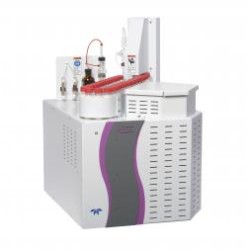
100 Microliter Freezing Point Osmometer
Product Details :
| Usage/Application | Laboratory |
| Sample volume | 100 microliter |
| Measuring time approx | 1,5 minutes |
| Display Type | Touch Display |
| Cooling Type | Air Cooling |
| Built In | Printer |
| Multi Level User Acess | Yes |
| Reproducibility | +-0.5%/+- 1,5mosm(100 microlitre) |
| Measurement range | 0-2500mosm/ kgH O |
| Dimensions | Width190mm,height278mm,depth216mm |
| Weight | approx.4.3 kg |
| Power supply | 100-230VAC approx.65VA |
| Measurement memory | 200 measurements with sample numbers |
| Data interfaces | USB/RS232forPCandRS232for handscanner |
Other Details:
- Measuring Principle: The freezing point of aqueous solutions is measured.The depression
- of freezing point compared to purewater is direct related to the osmotic concentration.Purewater freezes at 0C, an aqueous solution with an osmolality of 1 osmol / kg water at -1.858C. 1 Mol of a substance dissolved in 1kgofwater givesasolution withan osmotic concentration of 1 osmol / kg water only if it is an ideal solution and if the
- substance does not dissociate.
- Function and Description: The sample (serum, blood, urine or any other solution) is filled in a plastic sample tube and cooled via a Peltierelement.These are semiconductor devices, which become cold on one side and warm on the other when electrical current flows through. The cold side cools the sample whilst the heat from the warm side dissipates into the air by convection.
- The Loser-Osmometer transports the warmth via cooling surfaces into the atmosphere, an extra water supply is not necessary. Operation of the instrument requires only an electrical socket. The temperatureonthe cold side is kept electronically constant.
- During the measuring process the temperature of the sample is
- measured by a thermistor (a temperature dependent resistor). This
- is part of the measuring headonto which the tube is placed.
- The measuring head is attached to guide rods which protect it from
- accidentaldamage.
- At a defined supercooling the freezing process is started by lowering a needle with ice crystals into the sample tube.The freezing point of the sample is reached.
- The method of initiating the freezing process is important for the reproducibility of measurements. Dipping a needle with ice crystals into the sample gives more exact results than stirring with a wire which is constantly dipping into the sample. Because of linear correlation between osmolality and freezing point the measurement of freezing point is a determination of osmolality. The results are displayed asmosm/ kgH O.
- Accessories included:50plastic tubes, 2x10 vials of standard solution300and900mosm/ kgH O, Spare thermistor, spare needle, spare fuses, Cleaning fluid and little funnel for cleaning needle hole,USB/RS232cables and data transmitting program, operating instructions.
- Calibration: The zero point is calibrated with distilled water and a standard point with the NaCl-solution of 300 mosm / kg H O supplied. Occasional checks shows that the calibration is very stable. An additional 900 mosm-solution can be used to calibrate, whereby the linearity is raised by higher concentrations.
- The second and third calibration point could be changed by user to meet other standard concentrations.
- Special Features and Advantages: Touch operation with Icon-styleon awide black&white graphic LCd display.
- Selectable languages.
- Multi level user access with passwords and usernames
- Single use plastic tubes.
- Blocking of measuring tube or needleby freezing in stand-by modeis counteractedby regular automatically defrosting.
- Needle canbe rinsed withwater or disinfection solution.
- Built in thermo printer and scanner for sample numbers.
- Integrated real time clock to sort measurements and calibrations
- Reduced operating costs asno extra water supply is necessary.
- Wide input voltage range 100-230VAC suitable for all countries.
- Operating of the Instrument: Switch on instrument,wait for ready display (approx.3minutes).
- Place 100l sample in the sample tube ( 10 %).
- Place the sample tube on to the measuring head.
- Lower the measuring head.Thesample tube is dipped into the
- cooling slot.
- Enter samplenumberusing the built in scanner or touch-display. These entries can also be madeafter measurement.
100 Microliter Freezing Point Osmometer
- Views: 261
- Vendor Type: Exporter, Trader
- Product Code: LTA0000010
- Availability: In Stock
- ₹0
Seller information